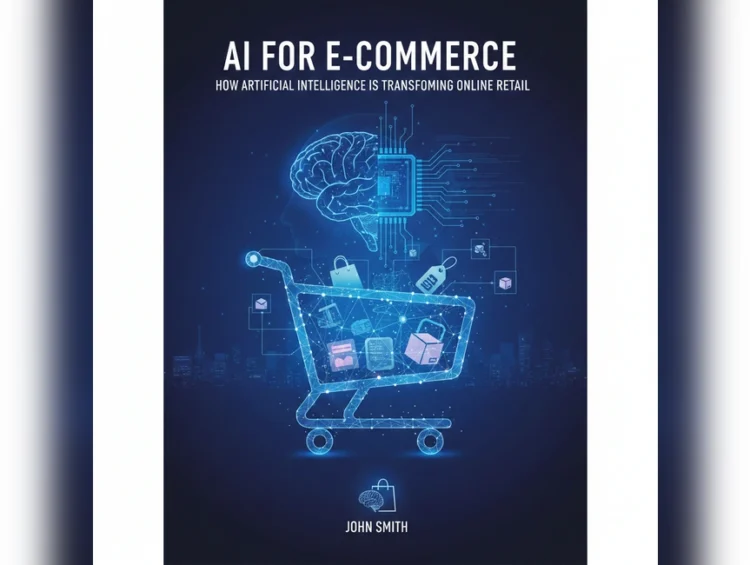
AI for E-commerce: How Artificial Intelligence Is Transforming Online Retail
Artificial Intelligence (AI) is no longer a futuristic concept—it is a core driver of innovation and growth in the e-commerce industry. From personalized product recommendations to intelligent supply chain optimization, AI is reshaping how online businesses operate, compete, and scale. As consumer expectations rise and digital competition intensifies, e-commerce brands that leverage AI gain a decisive advantage in efficiency, customer experience, and profitability.
This article explores how AI is transforming e-commerce, key use cases, benefits, challenges, real-world examples, and what the future holds for AI-powered online retail.
Understanding AI in E-commerce
AI in e-commerce refers to the use of machine learning, natural language processing (NLP), computer vision, and predictive analytics to automate, optimize, and enhance online shopping experiences. Unlike traditional rule-based systems, AI learns from data, adapts to changing user behavior, and continuously improves its performance.
Core AI technologies used in e-commerce include:
- Machine Learning (ML): Identifies patterns in customer behavior and predicts outcomes.
- Natural Language Processing (NLP): Powers chatbots, voice search, and sentiment analysis.
- Computer Vision: Enables visual search, image recognition, and automated tagging.
- Predictive Analytics: Forecasts demand, inventory needs, and customer lifetime value.
Why AI Matters for E-commerce Businesses
E-commerce operates in a highly competitive environment where speed, personalization, and efficiency are critical. AI addresses several key challenges faced by online retailers:
- Managing massive volumes of customer data
- Delivering personalized experiences at scale
- Reducing cart abandonment
- Optimizing pricing and inventory
- Improving customer support without increasing costs
By automating complex decision-making and uncovering hidden insights, AI helps businesses grow smarter—not just bigger.
Key Applications of AI in E-commerce
1. Personalized Product Recommendations
One of the most impactful uses of AI in e-commerce is personalization. AI algorithms analyze browsing history, purchase behavior, demographics, and real-time interactions to recommend products tailored to each user.
Benefits include:
- Higher conversion rates
- Increased average order value (AOV)
- Improved customer satisfaction
Platforms like Amazon and Alibaba attribute a significant portion of their revenue to AI-driven recommendation engines.
2. AI-Powered Search and Discovery
Traditional keyword-based search often fails to capture user intent. AI improves on this by understanding context, synonyms, and natural language queries.
Advanced AI search features include:
- Semantic search
- Voice search optimization
- Visual search using images instead of text
This leads to faster product discovery and reduced friction in the buying journey.
3. Chatbots and Virtual Assistants
AI chatbots provide instant, 24/7 customer support without human intervention. Modern chatbots can handle complex conversations, understand intent, and even upsell products.
Use cases:
- Answering FAQs
- Order tracking
- Product recommendations
- Handling returns and refunds
By automating customer service, businesses reduce costs while improving response times.
4. Dynamic Pricing and Revenue Optimization
AI enables real-time pricing adjustments based on demand, competition, inventory levels, and customer behavior. This strategy, known as dynamic pricing, helps maximize revenue while staying competitive.
AI pricing systems can:
- Detect price sensitivity
- Adjust discounts automatically
- Optimize promotional campaigns
This is particularly valuable in industries with thin margins and high competition.
5. Inventory Management and Demand Forecasting
Inventory mismanagement leads to lost sales or excess stock. AI analyzes historical data, seasonal trends, and external factors to forecast demand accurately.
Key benefits:
- Reduced stockouts
- Lower holding costs
- Improved supplier coordination
AI-driven inventory systems are especially powerful for large catalogs and multi-channel retailers.
6. Fraud Detection and Payment Security
E-commerce fraud is a growing threat. AI models can detect suspicious activity by analyzing transaction patterns in real time.
AI helps by:
- Identifying fraudulent transactions instantly
- Reducing false positives
- Enhancing payment security
This protects both businesses and customers, building long-term trust.
7. Marketing Automation and Customer Segmentation
AI transforms digital marketing by automating campaign optimization and audience segmentation.
Capabilities include:
- Predictive customer lifetime value (CLV)
- Automated email personalization
- AI-driven ad targeting
- Sentiment analysis from reviews and social media
This results in higher ROI and more relevant messaging.
8. Visual Merchandising and Computer Vision
Computer vision allows AI to analyze images and videos to improve product presentation.
Applications include:
- Automated product tagging
- Visual similarity recommendations
- Virtual try-on experiences
- Quality control for product images
Fashion and beauty brands especially benefit from these capabilities.
Benefits of AI for E-commerce
Enhanced Customer Experience
AI creates seamless, personalized shopping journeys that adapt to individual preferences. Customers feel understood, leading to higher loyalty and repeat purchases.
Operational Efficiency
Automation reduces manual tasks in customer service, inventory management, and marketing, allowing teams to focus on strategy and creativity.
Data-Driven Decision Making
AI uncovers insights hidden in massive datasets, enabling smarter business decisions with less guesswork.
Scalability
AI systems scale effortlessly, making them ideal for fast-growing e-commerce businesses.
Challenges and Limitations of AI in E-commerce
Despite its advantages, AI adoption comes with challenges:
Data Quality and Privacy
AI systems depend on high-quality data. Poor or biased data leads to inaccurate results. Additionally, businesses must comply with data protection regulations such as GDPR.
High Initial Investment
Implementing AI solutions may require significant upfront costs in technology, infrastructure, and expertise.
Complexity and Integration
Integrating AI tools with existing e-commerce platforms can be technically complex.
Ethical Considerations
Issues like algorithmic bias and transparency must be addressed to maintain consumer trust.
Real-World Examples of AI in E-commerce
Amazon
Amazon uses AI across its entire ecosystem—from product recommendations and Alexa voice shopping to warehouse robotics and dynamic pricing.
Shopify
Shopify integrates AI tools that help merchants with product descriptions, pricing suggestions, and customer insights.
Alibaba
Alibaba leverages AI for personalized storefronts, demand forecasting, and AI-driven logistics, handling billions of transactions annually.
AI Tools Commonly Used in E-commerce
Popular AI-powered tools include:
- Chatbots: Tidio, Drift, Intercom
- Recommendation Engines: Dynamic Yield, Nosto
- Marketing AI: HubSpot, Klaviyo, Jasper
- Fraud Detection: Riskified, Forter
- Visual Search: Syte, Clarifai
These tools help businesses adopt AI without building systems from scratch.
Future Trends of AI in E-commerce
Hyper-Personalization
AI will move beyond basic recommendations to deliver fully individualized shopping experiences in real time.
Voice and Conversational Commerce
Voice assistants and conversational AI will become mainstream shopping channels.
Autonomous E-commerce Operations
From self-optimizing ads to automated supply chains, AI will increasingly run e-commerce operations with minimal human input.
AI-Generated Content
Product descriptions, images, and even videos will be created by AI at scale, reducing content production costs.
How to Get Started with AI in E-commerce
For businesses looking to adopt AI, a phased approach works best:
- Identify pain points (e.g., low conversion, high support costs)
- Start with proven AI tools
- Integrate AI with existing platforms
- Monitor performance and optimize continuously
- Train teams to work alongside AI systems
Conclusion
AI for e-commerce is no longer optional—it is essential for staying competitive in the digital marketplace. By enhancing personalization, automating operations, and enabling data-driven decisions, AI empowers businesses to grow faster and smarter.
As technology continues to evolve, e-commerce brands that embrace AI early will lead the future of online retail. Those who delay risk falling behind in an industry defined by speed, innovation, and customer experience.
7 Powerful Strategies: Best AI Tools for Consistent Brand Voice in 2026