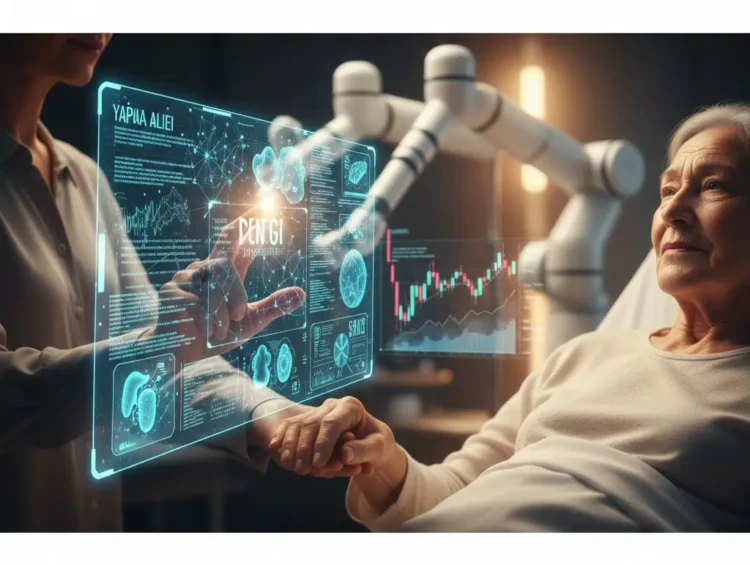
Critical Transformation: Where Artificial Intelligence and Human Intelligence Drive Breakthroughs
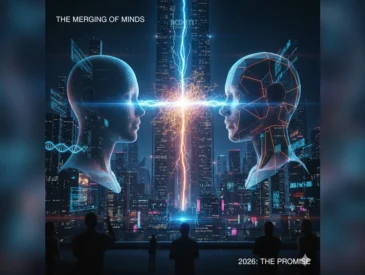
The core concepts of Artificial Intelligence and Human Intelligence stand at the heart of today’s technological revolution. While often viewed in terms of competition, modern applications show that these two forms of intelligence are profoundly complementary, generating breakthrough results across almost every sector globally.
In this comprehensive article, we will delve into the fundamental differences between Artificial Intelligence and Human Intelligence, examine how they converge in critical sectors, and discuss the ethical and future implications of this symbiotic relationship.
📝 Table of Contents
Fundamental Differences Between Artificial Intelligence and Human Intelligence
Speed and Scale vs. Adaptation and Empathy
Artificial Intelligence and Human Intelligence: Synergy in Key Sectors
Artificial Intelligence and Human Intelligence in Healthcare
Diagnostic Imaging: AI Speed and HI Interpretation
Treatment Ethics and Patient Care
Artificial Intelligence and Human Intelligence in Finance and Cybersecurity
Fraud Detection and Algorithmic Strategy
Artificial Intelligence and Human Intelligence in Education and HR Management
Personalized Learning Experiences
Recruitment and Bias Management
The Ethical and Philosophical Dimension of Artificial Intelligence and Human Intelligence Collaboration
The Problem of Responsibility and Bias
The Age of Augmented Intelligence
Conclusion
1. Fundamental Differences Between Artificial Intelligence and Human Intelligence
Understanding the distinctions between Artificial Intelligence and Human Intelligence is the first step in identifying their areas of superiority. This is not just a technical separation but also a philosophical perspective.
Speed and Scale vs. Adaptation and Empathy
Artificial Intelligence excels in the ability to process massive datasets at sub-second speeds and to perform specific tasks (e.g., playing chess) flawlessly and without fatigue. AI’s learning process is strictly confined to the data it is provided.
Human Intelligence, though slower, possesses superior capabilities like creativity, abstract thought, and one-shot learning. Humans incorporate emotion, culture, and intuition into their decisions, creating a contextual richness that machines can never fully replicate.
2. Artificial Intelligence and Human Intelligence: Synergy in Key Sectors
The fields where the strengths of the two intelligences merge are witnessing the most striking advancements. The integration of Artificial Intelligence and Human Intelligence is profoundly transforming these industries.
Artificial Intelligence and Human Intelligence in Healthcare
Healthcare is the most critical area where AI directly impacts human life. Medical professionals are embracing AI not as a competitor, but as a vital assistant.
Diagnostic Imaging: AI Speed and HI Interpretation
AI’s Role: In radiological imaging (MRI, CT, X-ray), AI can identify indicators like cancerous nodules or small lesions much earlier and more consistently than the human eye alone. This significantly boosts early detection rates.
HI’s Role: AI provides a probability, but the ultimate diagnosis rests with the human doctor. The physician combines the AI finding with the patient’s complex medical history, familial risks, and emotional state to make an accurate, holistic judgment. This contextual interpretation transcends the limits of machine learning.
Treatment Ethics and Patient Care
While AI-driven big data analysis supports the personalization of treatment plans, the decision of which treatment to administer, and the handling of its psychological impact on the patient, is managed by human experts. Even in robotic surgery, highly precise AI-assisted systems always operate under the command and ethical supervision of a human surgeon.
External Link Recommendation: To learn more about Artificial Intelligence applications, you may explore the relevant publications from a reliable institution like MIT Technology Review’s AI section. (DoFollow)
Artificial Intelligence and Human Intelligence in Finance and Cybersecurity
The rapid pace of financial markets and the complexity of cyber threats mandate the collaboration between Artificial Intelligence and Human Intelligence.
Fraud Detection and Algorithmic Strategy
AI’s Role: Analyzing millions of transactions per second, AI can detect fraudulent attempts instantly, potentially preventing billions of dollars in losses for banks and customers.
HI’s Role: While algorithmic trading systems execute high-speed transactions, factors difficult to quantify as data, such as global market uncertainties, political risks, and investor psychology, are evaluated by human strategists. In moments of financial crisis, the crucial ethical decisions are always made by human executives.
Artificial Intelligence and Human Intelligence in Education and HR Management
The fields of Education and Human Resources (HR) focus on the interplay of Artificial Intelligence and Human Intelligence for personalization and bias management.
Personalized Learning Experiences
AI can analyze students’ learning pace and strengths/weaknesses, offering customized content. However, the teacher designs the personalized system, provides inspiration, mentorship, and addresses the students’ emotional needs. Artificial Intelligence and Human Intelligence collaborate to maximize student success.
Recruitment and Bias Management
AI’s Role: In HR departments, AI accelerates resume screening and narrows down the candidate pool based on objective criteria.
HI’s Role: Human oversight is essential to mitigate potential biases (such as gender or racial discrimination) that may creep into the AI’s training data. The stages of interviews requiring emotional and cultural intelligence, along with the final hiring decision, belong to HR specialists.
External Link Recommendation: For a detailed study on Artificial Intelligence applications and the future of Human Resources Management, refer to Harvard Business Review’s collection on AI in the Workplace. (DoFollow)
3. The Ethical and Philosophical Dimension of Artificial Intelligence and Human Intelligence Collaboration
As technological power grows, managing its limits and ethical ramifications becomes our greatest challenge.
The Problem of Responsibility and Bias
AI systems can reflect, and even amplify, the biases present in the data they are trained on. Who bears the responsibility if an autonomous vehicle causes an accident? Such ethical dilemmas require profound human philosophy and legal reasoning, rather than mere rational calculation.
Humans are responsible for setting the principles of transparency, accountability, and fairness to ensure that the partnership between Artificial Intelligence and Human Intelligence progresses responsibly.
External Link Recommendation: For current guidelines on the academic and ethical risks of using Artificial Intelligence, consult the IEEE Global Initiative on Ethics of Autonomous and Intelligent Systems. (DoFollow)
The Age of Augmented Intelligence
The future of the relationship between Artificial Intelligence and Human Intelligence lies in the concept of “Augmented Intelligence.” In this model, AI does not replace human intelligence; rather, it empowers, accelerates, and expands human capabilities.
Freed from data analysis and repetitive processes, humans can focus on high-value activities that only they can perform: strategic thinking, social interaction, artistic creation, and ethical governance.
Internal Link Recommendation: Solidify your knowledge by reading our other article on the latest developments and business impacts in this sector.
Conclusion
Artificial Intelligence and Human Intelligence are not opposing forces, but two complementary systems that make the modern world more efficient, more knowledgeable, and potentially more equitable.
AI provides analytical precision and processing power, while human intelligence offers the guiding moral compass, creative vision, and emotional depth. The future hinges on this critical partnership, combining the speed of machines with the wisdom of humanity. Managing this partnership and keeping it within ethical boundaries remains the single greatest responsibility of the twenty-first century.
Adapting to this transformation and capitalizing on the opportunities created by Artificial Intelligence and Human Intelligence is an unavoidable necessity for individuals and organizations alike.
Would you like me to focus on creating a social media post or an email newsletter based on this optimized article?
DANGEROUS Turning Point: Is the Global AI War at the Gates? 7 Critical Fronts Analyzed