AI in 2030: 5 Massive Revolutions That Will Change Our Lives
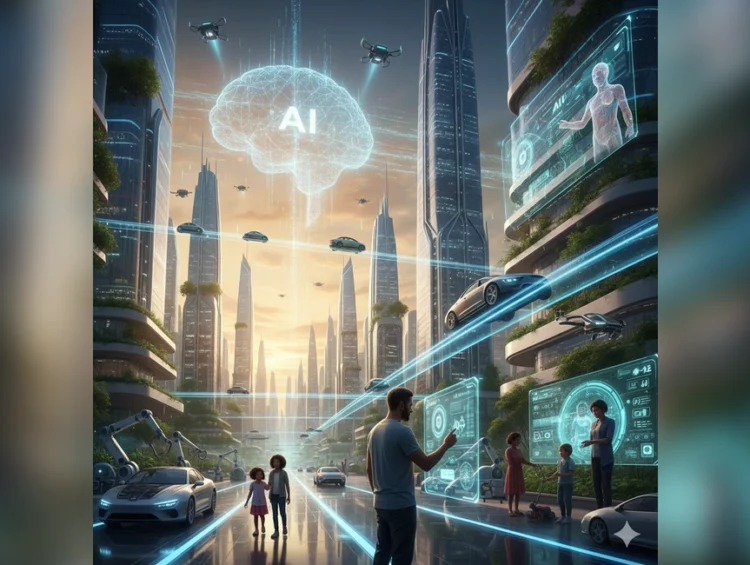
AI in 2030 will surpass being just a technology headline and become the operating system of humanity. The simple algorithms we use today will be replaced by systems that understand their environment, possess advanced reasoning skills, and can process billions of data points in seconds. This great transformation brings with it 5 massive revolutions that will fundamentally shake our social structure.
Table of Contents
Introduction: The Digital Architecture of the Future
The decade we are in is witnessing the fastest technological acceleration in human history. According to Stanford University AI Index reports, computing power is increasing exponentially every day. AI in 2030 will merge with the Internet of Things (IoT) and 6G technologies, turning every object around us into an intelligent data terminal.
1. Personalized Medicine and the Genomic Revolution
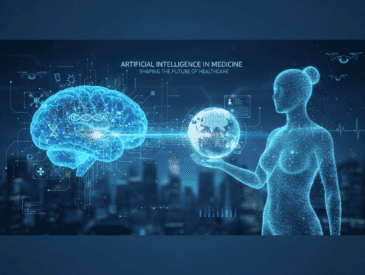
While traditional medical methods develop treatments based on the “average person,” AI in 2030 will produce solutions specific to each individual’s genetic code.
Digital Twins: A digital copy (Digital Twin) of every human will be kept in the cloud. Before a drug is given to you, it will be tested on your digital twin, and potential side effects will be predicted with 100% accuracy.
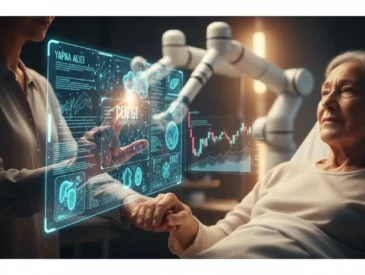
Predictive Analytics: AI-powered wearable technologies will be able to report the risk of a heart attack 72 hours before symptoms appear. This could reduce the “emergency service” load of hospitals by 40%.
AI and Drug Discovery: The development process of a new antibiotic or cancer drug will drop from 10 years to a few months, thanks to simulations of AI in 2030.
For more information on the development of modern medicine, you can check the World Health Organization (WHO) reports.
2. Education: Maximizing Individual Potential
We are reaching the end of the “one-size-fits-all” model in education. AI in 2030 will map out the cognitive landscape of every student.
If a student understands visual data better, AI will instantly transform lecture notes into infographics and videos. Language learning will move from being a necessity to a hobby, thanks to real-time AI translation and practice bots. Classroom sizes will transcend physical boundaries, evolving into global campuses via VR (Virtual Reality).
<div id=”transportation”></div>
3. Smart Cities: The Rise of Autonomous Ecosystems
Urban planning is shifting from static architecture to dynamic software management. AI in 2030 will flow through every vein of urban life.
Traffic Algorithms: Autonomous vehicles (Level 5) will glide between each other with millimeter-accurate calculations without the need for traffic lights. This could completely eliminate the traffic problem in major metropolises.
Energy Efficiency: Grids will predict the energy needs of neighborhoods in real-time and distribute renewable energy sources (solar, wind) most efficiently. The carbon footprint will thus be minimized.
You can examine future projections on MIT Technology Review for a broader perspective.
4. Business and Economy: A New Production Paradigm
Economic authorities predict that the use of AI in 2030 will contribute more than $15 trillion to the global GDP.
So, what will happen to our jobs? Repetitive, data-entry-based, or physical strength-requiring jobs will be completely taken over by robotic systems. Humans will specialize in areas requiring “creative problem solving,” “emotional intelligence,” and “strategic leadership.” It is expected that weekly working hours will drop to 20 hours and concepts like “Universal Basic Income” will be legalized with the economy of AI in 2030.
5. Daily Life: The Era of Invisible Technology
The best technology is the one you don’t realize is there. AI in 2030 will move out of screens and be embedded into our physical environment.
Smart windows will adjust heat according to the weather, and smart kitchens will offer you recipes containing the protein you need that day based on your health data. Shopping will be done via autonomous drones that arrive at your home before you even say “it’s running out.” This will allow people to devote their time entirely to themselves and their loved ones. Learn more about these changes on our Alwordpulse.com
Technology and Ethics: Is Algorithmic Justice Possible?
All these developments also have a shadow side. As AI in 2030 becomes widespread, the issue of “algorithmic bias” will become more critical. Will an AI act fairly when hiring or giving a loan?
Data privacy will be the greatest human rights struggle of this era. The necessity for establishing global “AI Audit Boards” to monitor how companies use our data will arise. You can read about precautions in this area in our Data Security and AI article.
Conclusion: A Hybrid Future with AI
In conclusion, AI in 2030 has the potential to move the world not into a dystopia, but into a technological Renaissance if managed correctly. This hybrid future, where human intelligence merges with machine speed, could be the solution to many problems seen as impossible (climate crisis, diseases, hunger).
The future will belong to those who evolve with it, not those who resist this change. Where will you stand in this revolution?
Best AI Tools for Students 2025: A Comprehensive Global Guide to Academic Excellence
Good