The Best AI Productivity Tools in 2026 and How to Build Your Own: The Definitive Guide
The Best AI Productivity Tools in 2026 have officially shifted the professional paradigm from “passive assistance” to “autonomous execution.” We are no longer in the era of simple chatbots that answer questions; we have entered the Age of Agentic AI. In this world, your tools don’t just suggest a response—they execute entire workflows, manage complex projects, and learn from your habits without constant prompting.
Whether you are an enterprise leader looking to scale or a solopreneur aiming for “single-person unicorn” status, mastering these tools—and knowing how to build your own—is the ultimate competitive advantage.
Table of Contents
The 2026 Productivity Landscape: Why Agents Rule
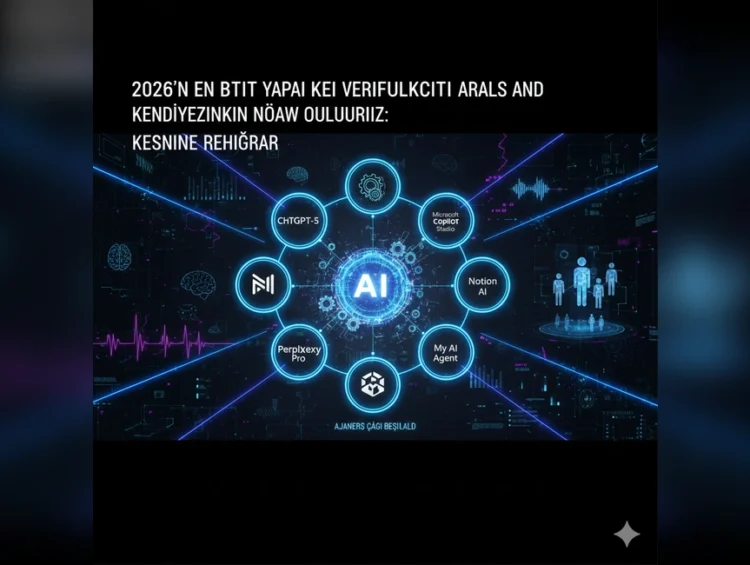
Top 5 Elite AI Productivity Tools in 2026
Building Your Own AI Tool: A Step-by-Step Technical Blueprint
RAG and Vector Databases: The Secret to Custom AI Power
Future-Proofing Your Workflow: Human-AI Collaboration
FAQ: Everything You Need to Know About AI in 2026
1. The 2026 Productivity Landscape: Why Agents Rule
In early 2026, a massive shift occurred: 80% of enterprise applications now have embedded AI agents. According to IDC’s 2026 Forecast, the focus has moved from Generative AI to Agentic AI.
Unlike traditional tools, The Best AI Productivity Tools in 2026 possess:
Reasoning: They “think” before they act, evaluating multiple paths to a goal.
Tool Use: They can interact with your browser, terminal, and APIs.
Memory: Long-term context that spans months of your professional history.
2. Top 5 Elite AI Productivity Tools in 2026
Based on performance benchmarks and user adoption, these are the current industry leaders:
1. ChatGPT-5 (Enterprise Edition)
The “World’s Brain.” Its new Strawberry-2 Reasoning engine allows it to solve PhD-level engineering problems with 99.4% accuracy. It is the core engine for most modern workflows.
2. Microsoft Copilot Studio
For those in the Microsoft 365 ecosystem, this is the ultimate tool. It allows users to build “Copilots” that live inside Teams and Excel, automating data analysis and meeting follow-ups autonomously.
3. Notion AI Agents
Notion has evolved from a document editor to a Company OS. Its agents proactively flag project risks, summarize thousands of Slack messages, and update timelines without human input.
4. CrewAI & LangGraph (For Developers)
These are the frameworks of choice for building multi-agent systems. They allow you to create a “digital department” where different AI agents (e.g., a Researcher, a Writer, and an Editor) collaborate on a single task.
5. Perplexity Pro (2026 Update)
The death of traditional search. Perplexity now acts as a real-time research agent that builds comprehensive reports with verified citations in seconds.
3. Building Your Own AI Tool: A Step-by-Step Technical Blueprint
Generic tools are great, but the real power lies in customization. Here is how to build your own AI productivity agent in 2026 using low-code frameworks.
Step 1: Define the Objective and Environment
Don’t build a “general” tool. Define a specific environment (e.g., “My Gmail and Jira”) and a specific goal (e.g., “Sort my emails and create Jira tickets for bugs”).
Step 2: Select Your Tech Stack
Logic Engine: GPT-5 or Claude 4 API.
Orchestration: n8n or Zapier AI (No-code) or LangChain (Code).
Memory: A vector database like Pinecone or Weaviate.
Step 3: Develop the “Brain” (System Prompting)
In 2026, we use “Chain of Thought” prompting. Tell the AI how to think.
Example: “Before acting, list three possible strategies. Evaluate them for efficiency. Choose the best one.”
4. RAG and Vector Databases: The Secret to Custom AI Power
The reason The Best AI Productivity Tools in 2026 are so effective is Retrieval-Augmented Generation (RAG). RAG allows your custom AI to access your private data (PDFs, emails, notes) without needing to retrain the entire model.
The RAG Workflow:
Chunking: Your data is broken into small, digestible pieces.
Embedding: Each piece is converted into a mathematical vector.
Retrieval: When you ask a question, the AI finds the most relevant “chunks” from your database.
Augmentation: The AI uses these chunks to provide a grounded, fact-based answer.
5. Future-Proofing Your Workflow: Human-AI Collaboration
By the end of 2026, the most successful professionals will be AI Orchestrators. Your value is no longer in doing the work, but in designing the systems that do the work. Organizations adopting this model report a 72% increase in operational efficiency.
6. FAQ: Everything You Need to Know About AI in 2026
Q: Do I need to be a programmer to build my own AI tool? A: No. In 2026, no-code platforms like MindStudio and n8n allow you to build complex agents using visual flowcharts.
Q: Is my data safe with custom AI agents? A: Most enterprise-grade tools now use Edge AI or Private VPCs, meaning your data never leaves your controlled environment.