When Will Artificial Intelligence Reach Human Intelligence? 2026 Expert Analysis

What happens when the machine finally catches up?”
As we step into 2026, the question is no longer if machines will match our minds, but how many months we have left before they do. In the past year, we’ve transitioned from AI that simply chats to “Agentic AI” that reasons, plans, and executes complex projects better than the average professional. While tech titans like Sam Altman and Dario Amodei suggest that human-level intelligence—Artificial General Intelligence (AGI)—is practically at our doorstep, the global community remains divided. Is this the birth of a digital colleague, or the start of the greatest existential challenge in history? In this guide, we break down the latest 2026 data to answer: When will artificial intelligence reach human intelligence?
The question of when will artificial intelligence reach human intelligence has shifted from the realm of science fiction into the core of global strategic planning. As we navigate through 2026, the arrival of Artificial General Intelligence (AGI)—the point where a machine can perform any intellectual task as well as a human—seems closer than ever. Leading experts from OpenAI, Anthropic, and Google DeepMind are no longer speaking in decades, but in months and years.
In this deep-dive report, we analyze the current trajectories, the “Five Levels of AI,” and the socio-economic implications of reaching the human intelligence threshold.
1. Defining the Milestone: What is Human-Level AI?
Before answering when will artificial intelligence reach human intelligence, we must define what we are measuring. Human intelligence is not just about processing data; it involves:
Reasoning and Logic: The ability to solve novel problems without prior training data.
Emotional Intelligence (EQ): Understanding and reacting to human nuances.
Generalization: Applying knowledge from one domain (e.g., music) to another (e.g., mathematics).
Current LLMs (Large Language Models) have already surpassed humans in specific benchmarks like bar exams and medical licensing tests. However, true “human-level” intelligence requires a system to possess common sense and causal reasoning.
2. The 2026 Predictions: Is AGI Already Here?
The consensus on when will artificial intelligence reach human intelligence has accelerated rapidly. In late 2025, several breakthroughs in “Reasoning Models” (such as OpenAI’s o1 and its successors) demonstrated that AI could now “think” before it speaks, mimicking human System 2 thinking.
Key Timelines from Industry Leaders:
Sam Altman (OpenAI): Has suggested that AGI could be reached by 2026 or 2027.
Elon Musk (xAI): Predicted that AI will be smarter than any single human by the end of 2025 or early 2026.
Ray Kurzweil (Google): A legendary futurist who has predicted 2029 for decades, a date that now looks conservative to many.
Dario Amodei (Anthropic): Believes that human-level competence in most cognitive tasks will be achieved by 2026–2027.
3. The Five Levels of AI: Where Are We Now?
To track when will artificial intelligence reach human intelligence, OpenAI introduced a 5-level framework:
Level 1: Chatbots (Conversational AI) – Completed (GPT-4, Claude 3.5).
Level 2: Reasoners (Human-level problem solving) – Currently in progress (2025-2026).
Level 3: Agents (Autonomous systems that can take actions) – Emerging in 2026.
Level 4: Innovators (AI that can assist in scientific discovery) – Expected 2027+.
Level 5: Organizations (AI that can run an entire company) – The final stage of AGI.
By mid-2026, we are firmly entering Level 3. This transition is a critical indicator of when will artificial intelligence reach human intelligence in practical, economic terms.
4. The Challenges: What is Holding AI Back?
While the hardware is scaling (with Blackwell chips and massive data centers), certain “human” traits remain elusive. If you are asking when will artificial intelligence reach human intelligence, you must consider these three bottlenecks:
A. The Data Wall
AI models have consumed almost all high-quality human text on the internet. To reach the next level, AI must learn from “synthetic data” or through physical interaction with the world (Robotics).
B. Energy and Infrastructure
Reaching human-level intelligence requires staggering amounts of power. While a human brain runs on 20 watts, an AGI-level data center requires gigawatts. The timeline of when will artificial intelligence reach human intelligence is now directly tied to the timeline of nuclear fusion and green energy expansion.
C. The Alignment Problem
As AI approaches human intelligence, ensuring it stays “safe” becomes exponentially harder. If we reach the intelligence threshold without solving AI ethical issues and risks (External Link), the results could be catastrophic.
5. Economic Impact: The Transformation of Work
When we discuss when will artificial intelligence reach human intelligence, we are also discussing the end of labor as we know it. According to our recent study on AI job displacement statistics by industry 2025 (Internal Link), once AI hits the 90th percentile of human intelligence, “white-collar” roles in legal, finance, and software engineering will be fully automatable.
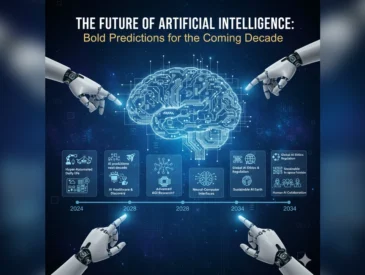
2026: AI agents become “Digital Colleagues.”
2028: AI reaches parity in creative and strategic leadership roles.
2030: The potential for a “Post-Scarcity” economy or mass structural unemployment.
6. Expert Debate: The Skeptics vs. The Optimists
Not everyone agrees on when will artificial intelligence reach human intelligence.
The Skeptics: Researchers like Yann LeCun (Meta) argue that LLMs lack a “world model” and that we are still decades away from true human-level reasoning.
The Optimists: Believers in “Scaling Laws” argue that simply adding more compute and data will inevitably lead to emergent human-level intelligence.
FAQ: Frequently Asked Questions
Q1: Will AI replace human doctors and lawyers by 2026?
A: While AI will reach human intelligence levels in these fields, “replacement” will be slowed by regulations and the need for human accountability.
Q2: Is AGI dangerous?
A: Intelligence is a tool. The danger is not “evil AI,” but “misaligned AI” that pursues a goal in a way that harms humanity.
Q3: Can AI have a soul or consciousness?
A: This is a philosophical question. Scientifically, AI can mimic human intelligence without being “conscious.” However, as it reaches human-level intelligence, the distinction may become irrelevant to the average user.
Conclusion: Preparing for the Singularity
The question of when will artificial intelligence reach human intelligence is no longer a matter of “if,” but a very imminent “when.” Most indicators point to the window between 2026 and 2029. As we move toward this singularity, the focus must shift from “building faster models” to “building safer systems.”
Whether AI becomes our greatest partner or our biggest rival depends on the guardrails we build today. For more on how to survive this transition, read our guide on white-collar professions at risk of AI automation