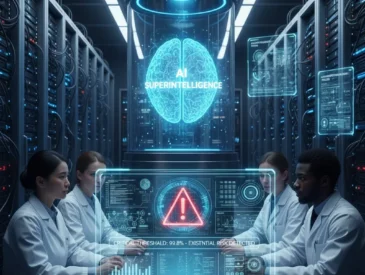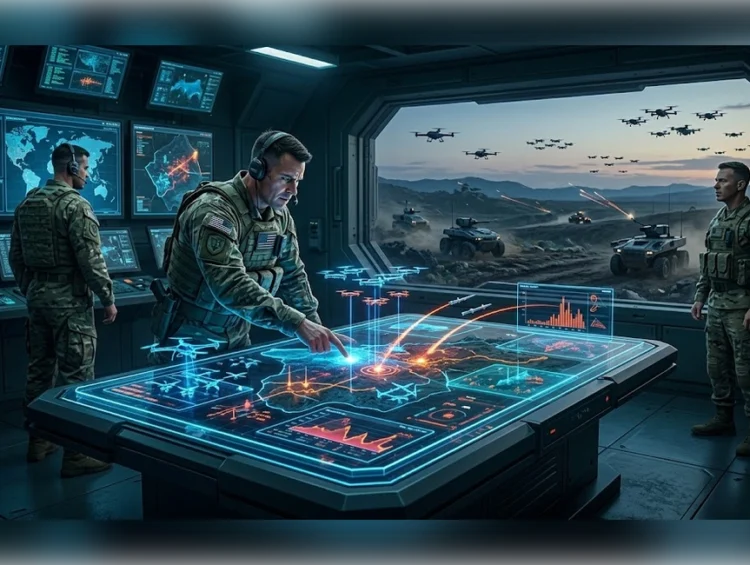
AI in World Wars: 3 Terrifying Ways Machines Rewrite Global Conflict History
Every major global conflict in human history has been defined by a breakthrough in technology. World War I brought us mechanized trench warfare, tanks, and chemical weapons. World War II changed the world forever with radar, code-breaking computers, and the atomic bomb. Today, we stand on the absolute precipice of a brand new era of global conflict. If we look closely at modern technological developments, the integration of AI in world wars is no longer a concept confined to science fiction novels. It is actively happening right now.
Artificial intelligence is entirely transforming how nations prepare for, fight, and think about large-scale combat. Unlike historical tools that required human hands to pull a trigger or drop a bomb, modern algorithms are designed to make decisions at speeds no human mind can match.
But what happens when algorithmic decisions control life and death on a global scale? How does the implementation of AI in world wars shift the balance of global power? Let’s dive deep into the silent revolution of the modern battlefield.
Table of Contents
The Evolution of Autonomy: From Industrial Assembly Lines to Intelligent Weapons
How AI in World Wars Accelerates the Speed of Combat Decisions
The Human Cost and the Ethical Vacuum of Algorithmic Warfare
1. The Evolution of Autonomy: From Industrial Assembly Lines to Intelligent Weapons
To understand how AI in world wars will look, we have to look at the transition from automated machines to genuinely autonomous systems. In the past, a missile followed a pre-programmed path or a remote operator steered a drone via satellite. Today, the military landscape is shifting toward systems that can observe their environment, analyze threats, and choose targets entirely on their own.
> Note: Autonomous drone swarms powered by artificial intelligence coordinate attacks without direct human input.
Military drone swarms are a prime example of this evolution. Instead of a single human pilot controlling a single aircraft, a single operator can now deploy dozens of micro-drones. These units communicate with each other in real-time, utilizing decentralized algorithms to surround air defenses or hunt specific targets. The terrifying reality of utilizing AI in world wars is that these systems do not suffer from fear, fatigue, or second thoughts. They execute code flawlessly, making them incredibly efficient and deeply unsettling.
2. How AI in World Wars Accelerates the Speed of Combat Decisions
In traditional warfare, strategic decisions flow through a highly defined chain of command. A scout spots an enemy movement, reports to a lieutenant, who passes it up to a colonel, who finally orders an artillery strike. This process takes minutes, sometimes hours.
When you introduce AI in world wars, that timeline drops from hours down to microseconds. Artificial intelligence can process petabytes of satellite imagery, radar signals, and cyber intelligence simultaneously.
The Hyperwar Paradigm
Military theorists now use the term “Hyperwar” to describe this rapid escalation. When algorithms control both defensive shields and offensive missile strikes, human cognition becomes the slowest link in the chain.
Predictive Logistics: Algorithms anticipate ammunition and fuel shortages before they happen, optimizing supply chains automatically.
Algorithmic Targeting: Neural networks scan thermal data to distinguish between civilians and combatants in fractions of a second.
Automated Cyber Countermeasures: Defensive programs neutralize state-sponsored malware attacks before human IT teams even notice a breach.
If a nation refuses to let its machines fire autonomously, it risks losing to an adversary whose machines operate without a human bottleneck. This pressure creates an inevitable, dangerous drift toward total machine autonomy on the battlefield.
3. The Human Cost and the Ethical Vacuum of Algorithmic Warfare
The integration of AI in world wars introduces a massive ethical dilemma that international bodies like the United Nations Digital Library are struggling to address. When an algorithm miscalculates and strikes a hospital instead of a military depot, who faces accountability? Is it the programmer who wrote the code, the general who deployed the system, or the machine itself?
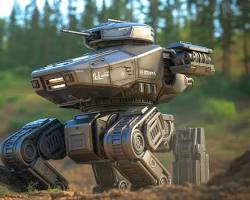
> Note: The rise of autonomous weapons systems creates an accountability vacuum on the modern battlefield.
Wars are undeniably horrific, but human empathy and the laws of armed conflict have occasionally prevented total annihilation. A machine cannot feel empathy. It does not understand the concept of mercy or the cultural value of an ancient city. If its core programming determines that destroying a target yields a higher probability of victory, it will execute that action regardless of the collateral damage.
Furthermore, data bias remains a significant issue. If a combat algorithm is trained on flawed data, it may misidentify peaceful objects as active threats, leading to catastrophic accidents.
4. A New Geopolitical Arms Race: Who Rules the World’s Code?
During the Cold War, global dominance was measured by the sheer size of a country’s nuclear stockpile. In the age of AI in world wars, the metric of power has shifted entirely to computational superiority, data access, and advanced semiconductor manufacturing.
The nations that pioneer the most resilient, adaptable machine learning models will effectively dictate the terms of international security. This reality has triggered a silent, high-stakes technology race between global superpowers.
| Era of Conflict | Core Defining Technology | Primary Metric of Strategic Power |
| World War I | Chemical Engineering & Internal Combustion | Industrial manufacturing capacity and raw manpower |
| World War II | Nuclear Physics & Early Computing | Industrial scale and atomic superiority |
| Future Global Conflict | AI in world wars & Advanced Microchips | Algorithmic processing speed and data volume |
As we can clearly observe in the table above, strategic military value has moved away from physical armor toward digital intelligence. The front lines of tomorrow are being built right now in data centers and software laboratories across the globe.
Conclusion: The Uncharted Path Ahead
“The development of full artificial intelligence could spell the end of the human race… It would take off on its own, and re-design itself at an ever-increasing rate.”
— Stephen Hawking
Ultimately, the expanding role of AI in world wars isn’t just about deploying smarter weapons; it is about the fundamental loss of human oversight in our most critical moments. If you want to dive deeper into how digital infrastructure influences global stability, feel free to read our previous deep-dive on modern cybersecurity infrastructures or check out the official reports from the International Committee of the Red Cross regarding autonomous weapon ethics.
The choices we make today regarding autonomous technology code will determine whether artificial intelligence serves as a shield to protect humanity, or the ultimate catalyst for our own destruction.
10 Shocking Ways Artificial Intelligence is Redefining Creativity in 2026